2013年5月21日

彗星

在今年二至三月, 各位天文愛好者或許聽過那時候有一顆名叫泛星的彗星(C/2011 L4 Pan-STARRS)並對它很感興趣吧!究竟那看上去金黃色的小球是一顆甚麼東西呢?究竟它是怎樣形成?它會為地球帶來甚麼呢?現在讓我為你把問題逐一解答吧!


圖片來源:Daniel Yim Wing Chun (AC49 Steward)


以上的圖片就是泛星彗星, 它在3月5日最接近地面, 在地球1.1天文單位外掠過(1天文單位=地球與太陽的平均距離) 可惜香港觀測條件並不理想,彗星在日落後距地平線不足10度,加上天氣不太好,所以較難觀測。

那有「尾巴」東西是甚麼呢?


圖片來源: http://aeea.nmns.edu.tw


彗星是由冰塊、塵埃及氣體組成。從結構上來說它大致上由彗核、彗髮及彗尾組成。我們可稱彗髮和被包著的彗核為彗頭。有些彗尾很長而且相當光亮,是彗星最顯眼的部分。

如果我們把彗星放大來看,便可清楚看見彗星美麗的結構(看下圖):


這些美麗的彗星是怎麼組成的呢?


圖片來源: Wikipedia

它們本身的直徑的範圍從數百米到數十公里不等。當彗星接近太陽時,太陽的熱力會蒸發彗核內的冰塊,形成煙霧狀的氣體包圍著彗核而形成彗髮。彗尾通常包括直長的「離子尾」(gas tail)和彎曲的「塵埃尾」(dust tail)。

離子尾:長而直,它是由電漿物質構成,易受太陽風的影響。太陽光照射離子尾時,受到很強的散射。紅光有小角度的散射,大部份散射是透過離子尾。而藍光受到大角度的散射,與陽光原進行方向反向,所以離子尾的顏色是淺藍色的。這與晴空為何是藍色的理由完全相同。彗星的彗尾永遠背向太陽,彗尾的形狀隨時都有變化。

塵埃尾:瀰散而彎曲, 是由塵埃物質構成,物質顆粒較大,受太陽風的影響較小。這些塵埃顆粒反射陽光形成了塵埃尾, 塵埃尾中的塵粒會受到太陽重力場的影響而略偏向太陽,這正是塵埃尾並非恰在彗星與太陽的反側,而略彎向太陽的原因。彗尾的長度可以相差很大,有些彗尾很短。

現在我們知道那 「尾巴」和發光點怎樣形成, 但最初的時候彗星是在甚麼地方形成的呢?彗星的形成大體上有兩種看法。

第一個說法就要從太陽系的形成談起了。太陽系的前身,是氣體與塵埃所組成的一大團雲氣,其半徑約15萬個天文單位 , 在46億年前,這團雲氣或許受到超新星爆炸震波的壓縮,開始緩慢旋轉與陷縮成盤狀,圓盤的中心是年輕的太陽。


圖片來源: Nature of the universe

盤面的雲氣顆粒相互碰撞,有相當比率的物質凝結成為行星與它們的衛星,另有部份殘存的雲氣物質凝結成彗星。太陽系形成後的四十多億年中,靠近太陽系中心區域的彗星,或與太陽、行星和衛星相撞,或受太陽輻射的蒸發已消失,我們現在所見的彗星應來自太陽系的邊緣。

所以現在廣為天文學家所接受的理論認為,太陽系大家族包括八大行星與外圍的奧爾特雲與柯伊伯帶。首先解釋何謂彗星週期。彗星週期是彗星沿著自己的軌道繞太陽公轉一圈的時間。一般將彗星分成長週期彗星(long-periodic comet)與短週期彗星(short-periodic comet)。週期少於200年者為短週期彗星,此類彗星的軌道大多與太陽系同一平面。而長週期彗星的軌道與太陽系面的夾角,可為任意角度。長週期彗星可能來至奧爾特雲而短週期彗星可能來自柯伊伯帶。

奧爾特雲理論:在1950年,荷蘭的天文學家Jan Oort提出在距離太陽30,000 天文單位到一光年之間的球殼狀地帶,有數以萬億計的彗星存在,這些彗星是太陽系形成時的殘留物。有些彗星偶爾受到"路過" 的星體的影響,或彼此間的碰撞,離開了原來的軌道。大多數的離軌彗星,從未進入用大型望遠鏡可偵測的距離。只有少數彗星,以各式各樣的軌道進入內太陽系。 不過到目前為止,奧爾特雲理論僅是假設,尚無直接的觀測證據。 柯伊伯帶: 奧爾特雲理論可以合理的解釋,長週期彗星的來源和這些彗星與黃道面(太陽在天球上的軌道平面)夾角的隨意性。但短週期彗星的軌道在太陽系行星的軌道面上,奧爾特雲理論無法合理解答短週期彗星的起源。 1951年,美國天文學家Gerard Kuiper提議在距離太陽30到100天文單位之間有一柯伊伯帶 (或稱為凱伯帶) ,帶上有許多繞行太陽的冰體,這些冰體的軌道面與行星相似,偶爾有些柯伊伯帶物體受到外行星的重力擾動與牽引,而向太陽的方向運行,在越過海王星的軌道時,更進一步受海王星重力的影響,而進入內太陽系成為短週期彗星。


彗星還會為我們帶來甚麼天文現象?

由彗星蒸發出來的彗星物質,顆粒較大者散佈在彗星的軌道上,並循彗星繞太陽的軌道繼續運行。當地球越過這些彗星的軌道時,彗星粒子(流星體)受大氣層影響,進入地球大氣層焚毀發出光芒,構成流星雨的現象。(見下圖)


圖片來源: Journal of Earth Science


流星雨


錯過了2013年年頭的泛星彗星嗎? 不要緊,今年大約十一月將可觀測一顆光度可媲美月亮,將是人類史上有觀測紀錄以來,最亮的「光科網」彗星(C/2012 S1 ISON) 。屆時可以與我們天文學會一起追星,一起親眼見證它在天空閃耀的時刻。


Written by Kernel Ng

2013年4月21日

Dark Matter - Fate of Our Universe

Author: Angus 

Is dark matter really a matter in dark? I will say no but nearly.

Matter that doesn’t emit (or emits very little) nor absorb electromagnetic radiation (or absorbs very little) can be considered as dark matter. The term of dark matter is brought up into the world of astronomy by scientists Jan Oort and Fritz Zwicky in early the 20th century to account for the missing part of the total mass in the universe.

Mass-to-light ratio
is used to express the relation between mass and light output of the mass using (of sun) as reference. So mass-to-light ratio of sun is 1. Scientists found out the light emitted from a galaxy multiplying with the average mass-to-light ratio, the mass of the galaxy comes out , followed by division by the volume that the galaxy occupied, we can find out the average density for luminous matter . If we compare the result to the critical density (the density that makes the universe flat, which mentioned in the last part), the density of luminous matter is only 0.5% of critical density. (Iain Nicolson (2007) “Dark Side of the Universe Dark Matter, Dark Energy, and the Fate if the Cosmos” page34)


1. How we discover 


►The figure shows the relationship between angular velocity of stars orbiting the center of the spiral galaxy and the distance of stars away from the center of the spiral galaxy. Line A is the expected Keplerian result which the stars follow Kepler’s laws (square of orbital speed of star is proportional to cube of distance from the semi-major axis, distance between center and the star). Line B is the actual result observed by advanced telescopes. (Picture from Wikipedia) 


►The picture shows how stars distributed in a spiral galaxy


By Newton’s law of universal gravitation 
 and centripetal force , we get the equation . Assuming the disk part is a perfect circle, and the density of matter is even distributed in the disk, we get mass  for disk part. The larger r (distance between center and star) the smaller w (angular speed) we get, but the reality isn’t. What makes the two lines different? The secret lies under dark matter. 

To remain the angular velocity being the same value when distance increases, extra mass must be added, so a large portion of mass without shining also should be taken into account, those are dark matter.

Also, phenomena of gravitational lens can help scientists to find out dark matter. With the assistance of general relativity, mass distorts the nearby spacetime and bends the light when light travels across. The image of background source may be magnified and distorted because of lensing effect. So if unreasonably distorted of images of stars with no shining massive matter stays in front of it may illustrate the presence of dark matter. 


►The image show the lensing effect (Picture from Wikipedia)


2. Types of dark matter

There are two types of dark matter, one is baryonic dark matter and the second is non-baryonic dark matter.

2.1 Baryonic dark matter

Baryonic matter is a matter that made up by three quarks or antiquarks (not to mention any anti-matter in this article), involving into four fundamental force (strong nuclear force, weak nuclear force, electromagnetic force and gravitational force), simply to say, baryon is everything we see, we touch, we lived with.

Baryonic dark matter is talking about the massive astrophysical compact halo object (MACHO), which is present around our galaxy. It can be black holes, neutron stars and dwarfs (white, brown and red one). Black hole with escape speed equaling to speed of light attracts everything nearby, even light (See more detail in previous article by Wayne Chan). But that doesn’t mean black hole wouldn’t emit electromagnetic wave near event horizon. The wave emitted called Hawking Radiation with interesting characteristic, faster emission rate with smaller black hole. Neutron star is a super dense remnant from massive star during a supernova after throwing off most of its surface layer. The materials in the star are supported by the neutron degeneracy pressure (no two neutron can occupy same quantum state). The mass limit is between 1.4 and around 3.2 (the upper limit of neutron star is still not very sure nowadays) solar mass.

White dwarf is the dense remnant of star after the life of main sequence star ends. The material is supported by electron degeneracy pressure, which is similar to the neutron star’s one, with a 1.4 solar mass upper limit according to Chandrasekhar limit. White dwarfs emit its remaining thermal energy stored and no nuclear fusion takes place, with time flies, the white dwarfs will turn into black dwarf after emitting all its remaining light.

Red dwarf is a main sequence star but with upper limit around 0.35 solar mass, it has much less luminosity and the mass isn’t large enough for helium flash. It only fueled by p-p chain, the nuclear fusion with four protons into helium nucleus.

Brown dwarf with an upper limit around 75 Jupiter mass can’t fuse hydrogen into helium, is considered as fail star.

2.2 Non-baryonic dark matter

Non-baryonic matter is a matter not formed from atoms and quarks. The matter only involve in weak nuclear force and gravitation, which is completely different from baryonic matter. But that “ghost” like particle how can we distinguish between the baryonic dark matter and non-baryonic dark matter?

In the first few moments of our early universe, everything is fixed, including the baryon-photon ratio. During the time, the Big Bang nucleo-synthesis took place, of which only atoms like hydrogen, deuterium (heavy hydrogen), helium-3 (light helium), helium and lithium exist. The portion of different types of atoms depends on the baryon-photon ratio, so too many baryon (>8% of total density) on the early universe causes more helium (larger portion in baryon) that we observed today, and too less baryon (<2% of total density) causes much less helium (lower portion in baryon). In the present moment, the baryon mostly composed of 74% of hydrogen and 26% of helium by mass. Then we can conclude that the baryon abundance lie between 2% and 8% of total density required turning our universe into flat (although our universe isn’t flat but nearly) (Adams Laughlin (1999) “The Five Ages Of The Universe” chapter1). So the other ingredients to fill up the universe are around 23% of dark matter and around 70% for dark energy, only 4.6% from atoms.

Non-baryonic dark matter is divided into three types, Hot Dark Matter (speed comparable with speed of light, neutrino is an example), Warm Dark Matter and Cold Dark Matter, in term of their mass and velocity, of which massive matter means lower speed, so mass and velocity are the same things.

3. Fate of our universe

As the previous paragraph mentioned the term “critical density”, but, how critical density relates to our future?

Our universe is under a battle between the gravitation and the force to expand (dark energy). If the mean density of total matter and radiation exactly equal to the critical density, the universe will expand forever but tends to zero when time travels and Euclidean geometry apply (for example, the triangle is 180 degree). If the mean density is below the critical density, the universe is open and the expansion is kept forever but the rate slows down because of gravity. The curvature of the universe would be negative with saddle-shaped surface (triangle is less than 180 degree). If the mean density is above the critical density, the universe is said to be positive curved with spherical surface (triangle is large than 180 degree), of which the universe is limited space but without boundary. The expansion of the universe will be stopped in someday and start shrinking into a “Big Crunch”.


▲Picture from The University of Hong Kong Department of Physics

The situation mentioned above is all about the possible situation without dark energy. Taking account of dark energy makes the situation more complex.

So, scientists certainly find that the mean density of our universe is lie between 0.1 and 10 where 1 equals to critical density. With the Hubble’s law, the redshift (speed of receding) of other galaxies is proportional to the distance between our Earth and galaxies, which shows the universe is expanding.


But no one knows whether the matter is laid in or out of threshold of critical mass and how our universe will evolve into, maybe only time can tell.

To find more about the topic, related stuff or astronomy magazines, please get more detail in our counter and use Astronomy Library service. WE ARE WAITING FOR YOUR ENQUIRY!!!!!!

2013年4月17日

[天文週] 天文雙週 - 2013彗星年[Astronomy Weeks]


2013年被譽為「彗星年」,今年先後會有兩顆較明亮的彗星於香港上空出現,亮度足以用肉眼觀測得到,他們分別是「泛星」彗星(C/2011 L4 Pan-STARRS) 以及「光科網」彗星(C/2012 S1 ISON)。自問不是很清楚甚麼是彗星,或者對彗星只是有基本的了解,參與我們天文雙週吧,你將會從中學懂更多。這次天文雙週內有一連串多元化的活動,除了觀星外,還有紀錄片觀賞、講座、展出及售賣天文書籍、儀器及精品,以及香港太空館導賞。有興趣的你必定要密切留意啦!

活動詳情:

活動名稱: 天文雙週 - 2013彗星年

日期: 4月23日 (星期二)

時間: 18:00 – 21:30

地點: 香港太空館

活動內容: 太空館導賞


日期: 4月25日 (星期四)

時間: 19:00 – 20:30

地點: MB201

活動內容: 天文紀錄片觀賞


日期: 4月26日 (星期五)

時間: 19:00 – 20:30

地點: MB201

活動內容: 天文講座 「彗星:來去匆匆的訪客」

講者: 香港大學物理系助理教授 吳志勇博士


日期: 4月15至19日 (星期一至五),4月22至26日 (星期一至五)

時間: 11:00 - 19:00

地點: 邵逸夫樓平台 (Subway旁),學生會大樓地下 (Starbucks對出)

活動內容: 展出及售賣天文書籍、儀器及精品


日期: 4月15至19日 (星期一至五),4月22日 (星期一),4月24至26

日 (星期三至五)

時間: 20:30 - 22:00

地點: 鈕魯詩樓天台

活動內容: 觀星


查詢: Cherry (6485 2100),Iris (9062 4738)


報名方法:
1) 到天文學會COUNTER
(開放時間: 11am – 7pm)
我們的counter將會在以下地方擺放:

15-19/4 邵逸夫樓平台 (Subway旁)

22-26/4 學生會大樓地下 (Starbucks對出)


2) 將以下資料電郵至 suastro@hku.hk
姓名(中文):
姓名(英文):
性別:
UID:
就讀科目:
就讀年級:
聯絡電話:
電郵地址:


活動已開始接受報名,所有活動費用全免,歡迎各位同學於以上時間到我們的counter留位及查詢。同學亦可以回覆此電郵,留下上述資料留位。如有任何查詢, 歡迎致電Cherry (6485 2100), Iris (9062 4738)或電郵至suastro@hku.hk查詢。


香港大學學生會天文學會

2013-2014年度

電郵: suastro@hku.hk
網址: http://www.hku.hk/suastro
Astro-blog: http://hkusuastro.blogspot.hk
Facebook: https://www.facebook.com/hkusuastroclub


2013 is called the “Year of Comets”. Two comets could be observed with naked eyes in Hong Kong if you are lucky enough. They are Pan-STARRS(C/2011 L4) and ISON(C/2012 S1). You can learn more about comets by joining activities during the Astronomy Weeks, which includes exhibition and sale of astronomy books, equipment and some other products, film appreciation, talk, stargazing and visiting the Hong Kong Space Museum. If you are interested, you must not miss any of these activities! See you there!!!


Details of the activity:

Name of function: Astronomy Weeks – 2013 “Year of Comets”


Date: 15-19 April 2013 (Mon-Fri), 22-26 April 2013 (Mon-Fri)

Time: 1100-1900

Venue: Run Run Shaw Podium (next next to subway), SU Building G/F (opposite to

Starbucks)

Activity: Exhibition and sale of astronomy books, equipment and some other products


Date: 23 April 2013 (Tue)

Time: 1800-2130

Venue: Hong Kong Space Museum

Activity: Visiting the Space Museum


Date: 25 April 2013 (Thu)

Time: 1900-2030

Venue: MB201

Activity: Film appreciation


Date: 26 April 2013 (Fri)

Time: 1900-2030

Venue: MB201

Activity: Astronomy talk - Comets: Visitors from Space


Date: 15-19 April 2013 (Mon-Fri), 22 April 2013(Mon), 24-26 April 2013 (Wed-Fri)

Time: 2030-2200

Venue: Roof of Knowles Building

Activity: Stargazing


Enquiries: Cherry (6485 2100) or Iris (9062 4738)


Application method:

1) Come to our counter:

(Opening hours: 11 am. – 7p.m.)

Our counter will be set up at:

15-19/4 Run Run Shaw Podium

22-26/4 SU Building G/F (opposite to Starbucks)


2) Apply through email by attaching following information:
Name (Chinese):
Name (English):
Gender:
UID:
Degree Curriculum:
Year:
Contact no.:
Email address:


The application period has been started. All activities are free of charge. Don’t hesitate and join us by visiting our counter and reserve for your place! Should you have any enquiries, please feel free to contact us via suastro@hku.hk or Cherry at 6485 2100 or Iris at 9062 4738.


Astronomy Club, HKUSU

Session 2013-2014

Email: suastro@hku.hk
Website: http://www.hku.hk/suastro
Astro-blog: http://hkusuastro.blogspot.hk
Facebook: https://www.facebook.com/hkusuastroclub

2013年4月10日

萬物終結者之謎—黑洞

By 井口的一隻小歪

  在香港城市裡頭,抬頭仰望夜空,看得見的星星扳扳手指頭就數得完,說真,只是「齋」看實在是沒有甚麼趣味。無邊無際的天空正正是代表了自由,正如一隻井中的青蛙,牠未必有足夠力量跳出井口,未必能夠清楚井外的世界,但至少若牠能夠在腦海中恣意地想像井口,牠絕不會苦悶。這道理也正正和我想說的一樣。而這次我要說的,正是所有人到現刻也看不見的東西-黑洞。

  黑洞……就是黑色的大洞嗎?人們總覺得她的名字很吸引。聽說黑洞的重力很強,一旦被吸了進去就再也不能回來。這是真的嗎? 要了解之前,不如先先看看不同的黑洞照片。

(National Geographic)


形成黑洞的選拔賽
究竟天體要成為黑洞要有甚麼條件呢?除了在宇宙一開始就存在的黑洞以外,其實天體要通過一個「黑洞選拔賽」,其條件就是質量要大約有太陽的25倍或以上。也就是說,在這場黑洞的選拔賽上,及格與不及格,幾乎是從一出生起就注定好了。為甚麼說是「幾乎」呢?其實在一次審核之後,還有一個復活賽。當質量僅差一點就能達到大約太陽質量的25倍時,若附近還有其他恆星,又能從對方那裡吸收氣體,又達到足以成為黑洞的應有質量時,就能成為黑洞。宇宙當中存在許多2至3個星星一組、互相繞著對方公轉的「聯星」。正因如此,只差臨門一腳的時候,便可以奪取鄰近星星的力量。

圖1: 質量達太陽 10 倍的黑洞之電腦模擬圖
從恆星成為黑洞

那麼接下來,我們來看看恆星是怎樣進化成黑洞吧。

恆星不可能自出生就永遠地綻放光芒。即使是星星,也有所謂的壽命。

另外,恆星不可能一生都維持同一個模樣,星星也會變老的。質量愈小的恆星愈長壽,質量愈大的恆星,老化的速度則愈快。這是由於大質量恆星的核心較熱和密度較高,它們燃燒氫氣的速度更高,所以生命反而較短。這是因為黑洞,正是較重恆星的壽命到達盡頭的時候最終的模樣。在黑洞選拔大賽的勝利者,起初也和太陽一樣,因核聚變而綻放出耀眼的光芒。但是時間久了,便會耗盡反應的物質。

當中心物質因核聚變而變成鐵後, 由於繼續燃燒鐵的核反應需要吸收能量才能運行 ,所以恆星核心產生能量的能力就會馬上停止,核心的壓力驟降。當核心積聚了足夠的鐵後﹐在百分一秒之內, 核心會猛烈地收縮,同時把核心的溫度提高。所有尚未使用的燃料會迅速核聚變成鐵或變成鎳,核心的外殼會塌縮在核心上,形成既小又密度高的核心。外側則由既冷又輕的氫氣體包圍,演變成雙層結構的天體。由其核心會不斷收縮,原子核的天然密度會成為巨大的阻力,防止核心進一步收縮,這時核心便會猛烈反彈,產生強烈的衝擊波,並把恆星外殼炸毀。這就是「超新星爆炸」。

超新星爆炸之後,其中心已經變成黑洞了,爆炸後所剩下的質量太陽只有太陽的三倍。

一但成為了黑洞,就再也不能回復以往的模樣,也再沒有下一個階段。這就是太陽質量25倍以上恆星最後的姿態。
圖2: 可以看見星星的一生
source: http://www.lcsd.gov.hk/CE/Museum/Space/EducationResource/Universe/framed_c/lecture.html 
HK Space museum 

就連宇宙最快的「光」也逃不掉

只要進入黑洞所在的一定範圍以內,所有物質都會被它的重力所補獲,再也回不來。一旦進入這個範圍,無論是多麼快的事物,都無法再次逃出黑洞,除非有東西能夠超越光速,否則即使是全字宙最快的「光」,有高達3x10⁸ m/s的速度,也逃不掉黑洞的引力。

由於光無法離開黑洞,所以我們也無法直接觀察黑洞本身。也是因為如此,美國物理學家(John Archibald Wheeler, 1911-2008)才命其為 “black hole” ,中文直譯為「黑洞」。
圖3: 黑洞的引力 
Source: http://www.welchco.com/02/14/01/60/04/03/1207.HTM
黑洞的城牆在何處?

黑洞的城牆其實就是事件穹界,事件穹界的意思便是事件在內不能為人所探知。在事件穹界之內的一切皆不能逃離,所以在這個城牆以內發生的一切,將永遠不能為人所知,事件穹界的半徑稱為史瓦西半徑(rs) ,數值的大小只取決於黑洞的質量。


G是萬有引力常數,c是光速,M為質量。


圖4: 史瓦西半俓 
Source: http://www.lcsd.gov.hk/CE/Museum/Space/EducationResource/Universe/framed_c/lecture.html 
HK Space museum
一般而言,是將史瓦西半俓直至內部的範圍定義為黑洞,而位在史瓦西半俓中心,便是所有質量皆壓縮成一點的地方,也就是「奇點」(Singularity)。
圖5: 奇點所在之處http://www.lcsd.gov.hk/CE/Museum/Space/EducationResource/Universe/framed_c/lecture.html 
HK Space museum
奇點十分不可思議,因為它聚集了黑洞所有質量。很多人以為奇點是一個半徑等於零、但密度無限大的地方。其實,比較正確的說法是我們根本不知道那裡是甚麼一回事,因為我們所知的一切物理定律根本不適用於情況如此極端的地方。
圖6:只要進入了這個半俓的範圍內,無論是誰也沒法走出來的。廣義相對論的中心思想是質量會扭曲其附近的時空,質量越大,影響越明顯。同樣道理,光線在通過大質量物質附近時,亦不會以直線運行。
source: astronomy.swin.edu.au
身體會否會變成麪條?

有很多人會說「只要我們進入了黑洞的範圍,就會變成麪條」,事實上是否這樣呢?

我們會從黑洞邊界接收到一股潮汐力。潮汐力是萬有引力的效果,它使得潮汐發生。它源於一個星體的直徑上各點的引力場的不相等。就例如地球上所發生的潮汐現象,就是因為這股力量。而這股力量是月球的引力影響了地球所產生的。
圖7: 潮汐力的影響 
Source: http://163.20.160.24/~star/modules/myalbum/photo.php?lid=1205
即是當人類先踏出腳尖接近黑洞,但頭部還在外側時,因施加在身體頂端「頭部」和尾端「腳尖」的重力不同,便會受到潮汐力的影響。當施加在頭部和腳尖的重力相差過大時,人類的身體就會被拉得細長。

但若果我們是身處在星系中心的超巨大黑洞時,所接收到的潮汐力(如銀河系)只有0.016 m/s2.

若果是一個小型黑洞(質量很小),其潮汐力是非常巨大的。頭部和腳尖的重力加速度相差約160萬m/s2。 亦即是約地球加速度的16萬倍。那就像你站在地面上被2000架飛船拉扯。

但即使在這個情況下,只要我們的身高愈矮,我們所接收到的潮汐力就會愈小。

在以上的相同條件下,體長只有1mm的跳蚤從恆星黑洞接收到的潮汐力,僅有105地球引力左右。換言之,接收到潮汐力的物質長度愈大,所承受的潮汐力也就愈大。因此月球對整個地球的引力影響,對於地球來說便會有「潮漲潮退」的明顯現象,但我們人在地球卻不會被拉長。

要了解黑洞真正面目,仍然有很多事物需要我們去探討。有機會的話我可以帶你去遊覽黑洞-沒有回程的旅行,你敢來嗎?請繼續留意ASTRO blog的更新。下期將會介紹另一黑-黑暗物質。

Sources:
Nature of universe, Physics Department, HKU(http://www.physics.hku.hk/~nature/notes/index.html)
Black Hole Physics: Basic Concepts and New Developments
Springer by V. Frolov (Author), I. Novikov (Author)
Photo Gallery, National Geographic
(http://science.nationalgeographic.com/science/photos/black-holes-gallery/) 

Author: Wayne Chan (CY)

2013年4月7日

[活動預告] 與天同行—古今星中外


有些時候…你抬頭看看天空,你可以看到一彎新月。

有些時候…你到郊外夜遊,你可以看到漫天星空。

這就是天文嗎?你有沒有曾經想過以前的人怎樣看天?

究竟東方和西方對天的態度有甚麼分別呢?


即使你對天文沒有基本的認識,也可以透過這個活動去了解一下天文的發展過程:

究竟古人如何看天上的星星?究竟如何觀察天空上的事物?古人如何利用天上的運

動去了解天氣的變化?這四個講座會令你學得更多。


活動詳情:

活動名稱: 與天同行—古今星中外

日期: 4月9日 (星期二)

地點: MB201

時間: 19:00 - 21:00

活動內容: 講座~遠古天文觀

講座~歐洲古天文

名額: 50 (歡迎walk-in)


日期: 4月12日 (星期五)

地點: MB201

時間: 19:00 – 22:45

活動內容: 講座~中國古天文

講座~現代對天的看法

觀星環節

名額: 50 (歡迎walk-in)


查詢: CY (6331 8961)


2013年3月25日

深空天體


作者: Yanki (52莊)

初嘗觀星的人,或許都看過衣架星團、七姊妹星團或是獵戶座大星雲吧?我們常稱這些漂亮的模糊光影為深空天體。哪究竟深空天體是甚麼?甚麼是星團?星團和星雲有分別嗎?以下將會一一為你解開疑問!

深空天體 (Deep Sky objects) 通常用於業餘天文界,是指天上除太陽系天體(包括行星、恆星、彗星、小行星、衛星)以外的天體,亦泛指星團、星雲和星系。

科學家主要按照深空天體的結構和形狀來分類。當中主要分為星團、星雲和星系三大類,每一類再有細分:


------------------------------------------------------------------------------------------------------------

星雲(Nebula)

星雲是由宇宙中的氣體和塵埃微粒組成的天體。雖然它們密度低,但由於星雲體積龐大,所以總質量很大。組成星雲的氣體是氫。它們擁有不同的化學元素,使他們有不同的顏色:橙色的是氫,紅色的是氮,而綠色的是氧。


在宇宙中,氣體和塵埃的分佈並不平均。所以在引力的吸引下,它們會密集起來,形成龐大但密度低的星雲。當星雲到了某一密度,它就會在引力作用下收縮,聚集起來。恆星就這麼演化出來。恆星形成後,又會拋射大量物質到宇宙,成為星雲的一部分原材料。所以,恆星與星雲在一定條件下是可以互相轉化的,形成循環。

星雲的分類
按形態區分,星雲有瀰漫星雲(diffuse nebula)、行星狀星雲(planetary nebula)和超新星殘骸(supernova remnants)。瀰漫星雲呈不規則形狀,廣闊稀薄。它們的直徑在幾十光年左右,密度平均為每立方厘米10-100個原子。著名的瀰漫星雲有獵戶座大星雲、馬頭星雲等;行星狀星雲則呈圓、橢圓或環狀,中央有高溫的核心星。在小質量星球接近死亡時,核心會大量向外擴散氣體和塵埃,它們吸了當中的高能量就形成能發出光芒的星雲;超新星遺跡是由超新星爆發後拋出的氣體形成。最有名超新星遺跡是金牛座中的蟹狀星雲M1。


超新星殘骸:M1蟹狀星雲
------------------------------------------------------------------------------------------------------------

按發光性質分類,星雲可分為發射星雲(emission nebula)、反射星雲(reflection nebula)和暗星雲(dark nebula)。前兩類均為亮星雲,要借助其他星體才能「發」光。發射星雲即星雲內的氣體吸收到中心或附近高溫恆星的紫外輻射,使星雲能發光,例子有M42獵戶座大星雲; 反射星雲即星雲因散射(scattering)或反射(reflection)附近低溫恆星的輻射而成為光度較發射星雲暗弱的星雲;暗星雲和亮星雲並沒有本質的差別,只是在暗星雲附近沒有亮星提供紫外輻射,因此它既不發光,也沒有光供它反射,要吸收和散射來自它後面來自恆星密集的銀河以及瀰漫星雲的光線,才可以被發現。著名的暗星雲有獵戶座裏的馬頭星雲。


                                            M42獵戶座大星雲
------------------------------------------------------------------------------------------------------------

星團(cluster)
星團是指一群群聚集的恆星,它們有共同的起源,並沿著相同方向運動。恆星是在星雲中誕生的,而一般星雲在形成恆星時,常是一大群一起形成的,這樣就形成了星團。一般10顆以上有物理聯繫的星群稱為星團(cluster)。根據星團中的恆星數目和疏密程度,星團可分為疏散和球形星團兩種:

疏散星團 (open cluster)沒有特別的形狀,其直徑亦不很大,星星的數目由數十至數百顆不等,它們疏落不規則地分佈著。它們大部分都是分佈在銀道面上(銀河系的旋臂)。金牛座的M45七姊妹星團就是疏散星團。


M45 七姊妹星團

球形星團(globular cluster)的星數較多,較大的球狀星團的恆星數能達數十萬、百萬顆。球狀星團是在銀河誕生之初就開始形成,當時物質仍然均勻的分佈在整個銀河系中,所以球狀星團也是均勻的散佈在銀河的各個角落。它們組成的恆星較老,所有的恆星均繞著其中心而運轉。


M12球形星團
------------------------------------------------------------------------------------------------------------

星系 (Galaxy)
由恆星、塵埃和氣體組成的最大集團叫做星系。原則上,一個典型的星系有1000億顆恆星,直徑可達10萬光年。這些星系稀疏地分布在宇宙中,科學家估計宇宙中存在著1000億到1兆個星系。星系依外形大致可分成橢圓星系、旋渦星系和不規則星系三種。

橢圓星系(Elliptical Galaxies)是幾乎不帶星際氣體,並多是由年老星球組成的的星系,外觀呈橢圓。有些位於星系團中心的橢圓星系會吞沒它周圍的星系,成為更大星系。


橢圓星系

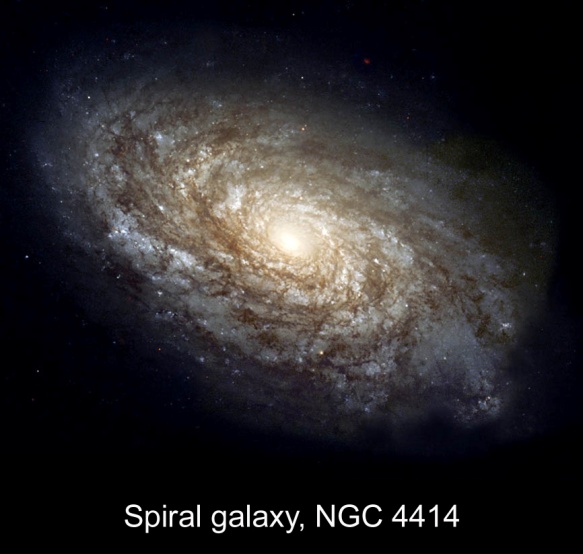
大多數星系都是螺旋形的,它們被稱為螺旋星系,或是漩渦星系(Spiral Galaxies)。這種星系是由旋轉的巨大氣體形成。它們的一個中心區域,叫核球,包含著許多恆星。


團繞它的是一個圓盤,這種天體圓盤的旋臂很發達,有著豐富的氣體,每通過旋臂重力界面就成為星系衝擊波並被壓縮,促進星球的形成。因此螺旋星系的旋臂部位集中了很多年輕新形成的星球。


螺旋星系:NGC 4414

不規則星系則是成長特別慢的星系。這些星系並仍在緩慢地大量繁衍著幼星。因為不規則星系內部擁有雖慢但卻很劇烈的恆星形成活動,所以天文學家會研究它們以進一步得知恆星是如何形成的。


不規則星系:大麥哲倫星雲


尋找深空天體
除了只有少數深空天體外,如M31仙女座大星系和M42獵戶座大星雲等能用肉眼看到,大部分深空天體都需用雙筒望遠鏡或天文望遠鏡才能看到。

可是,由於大部分深空天體都比較暗,憑肉眼不能用雙筒鏡或望遠鏡直接指向它們的位置,所以就需用到star-hopping。這個尋找深空天體最有效又簡單的方法。觀測者利用星圖,將望遠鏡指向深空天體附近的一些光星作出發點,然後慢慢把望遠鏡從一顆光星移向另外一顆,直至找到想看到的天體。


Reference:

-星雲星團淺介 劉麗純 國立台灣師範大學自然科學研究社88學年度社刊
http://www.ntnu.edu.tw/nature/knowledge/88%BE%C7%A6~%AB%D7%AA%C0%A5Z/%ACP%B6%B3%ACP%B9%CE%B2L%A4%B6.htm

-星雲 劉遷 中國公眾科技網
http://210.14.113.18/gate/big5/chro.cpst.net.cn/zzzc/2005_06/1117593304.html

- 星 系 的 形 成 交通大學通識科程新天文學導論講義 曾耀寰http://web2.cc.nctu.edu.tw/~tseng327/nctu-cosmos/mid-term/nctu8.htm